DWI Bail Bonds for Guilford County First-Time Offenders
What a first DWI arrest in Greensboro really looks like after midnight
A first DWI in Greensboro catches families off guard. The arrest often happens on Wendover Avenue, Battleground Avenue, Gate City Boulevard, or near the Downtown Greensboro bar corridors. The officer brings the driver to the Guilford County Detention Center at 201 S Edgeworth St, Greensboro, NC 27401. The magistrate inside the same complex is on duty around the clock and sets the release conditions. Bond amounts on a first DWI vary. Many first-time DWI charges receive conditions of release that can include a secured bond, an unsecured bond, or supervised release. If the magistrate orders a secured bond, families must either post cash at the jail or use a surety bond through a licensed bondsman to secure release.
Time matters. The detention center processes bonds 24 hours a day. In practice, once a bond is posted, release usually takes two to four hours depending on jail volume and the time of day. The difference between waiting until morning and acting now can be a full night in custody. That is why families look for a local Greensboro bondsman who can move fast and who understands DWI release patterns in Guilford County.
Why payment flexibility decides who gets home tonight
Families do not plan for bail. Many cannot cover the full cost at once. In North Carolina, every bondsman must comply with the same premium rule. The premium is the nonrefundable fee for the surety bond. It is capped under N.C. Gen. Stat. §58-71-95 at 15 percent of the total bond amount or a minimum of $150. That cap protects families from inflated charges, but it does not solve cash flow at 2 AM. Bail bond payment plans Greensboro searches spike at these times because families need a way to spread the premium across payments without junk fees or compounding interest.
Guilford County first-time DWI bonds are often set in ranges where a payment plan is the difference between release now and release days later. Straightforward, interest-free installments aligned to paydays let a co-signer act in minutes. The best structure is simple to understand. Half down with the remainder paid over time. Or for qualifying bonds of $5,000 and higher, five percent down with the balance financed at zero percent interest. No hidden costs. No surprise add-ons at the detention center window.
How a DWI surety bond moves from the magistrate’s desk to the release door
Guilford County runs a tight booking and bond workflow. The person is processed, fingerprinted, and photographed at 201 S Edgeworth St. The magistrate reviews the charge, the facts presented by the officer, and any criminal history. Release conditions follow the pretrial release rules in Article 26 of Chapter 15A. If the magistrate sets a secured bond, a surety can guarantee it. A surety bond is a written guarantee filed by a licensed bondsman that assures the court the defendant will appear. The defendant does not pay the full bond amount to the jail. The defendant or co-signer pays the premium to the bondsman and signs agreements. The bondsman files the bond at the magistrate window. The jail then moves the defendant through property return and out-processing.
In Greensboro, out-processing after bond posting usually runs two to four hours. Release can run faster during weekday hours and slower during weekend nights or holiday shifts. A local bondsman based one block from the detention center compresses clock time because documents arrive at the magistrate counter quickly and any questions get answered in person. That proximity advantage is real in Guilford County where a 30 to 60 minute drive from an out-of-town bondsman often adds to the wait.
What the magistrate considers on a first DWI
North Carolina’s pretrial release law starts with the presumption of release on least restrictive conditions that ensure the person comes to court and the community stays safe. The core rules appear in N.C. Gen. Stat. §15A-531 through §15A-535. The magistrate looks at the person’s ties to Greensboro or Guilford County, employment, prior record, and any history of missing court. For DWI under N.C. Gen. Stat. §20-138.1, the magistrate also considers sobriety hold timing, any injuries, property damage, and aggravating facts reported by the officer. Many first-offense DWI cases qualify for release within hours. If the magistrate orders a secured bond, a surety bond is often the fastest path to release.
If a history of missed court appears, the magistrate may require a secured bond to reduce Failure to Appear risk. If the person has a local job in Greensboro or High Point and long-term residence in areas like Fisher Park, Adams Farm, Glenwood, Irving Park, or Lindley Park, that helps. If the person is a student at UNCG or NC A&T and lives in College Hill or near the campus corridors, the magistrate considers those ties too.
How payment plans for first-time DWI bonds in Greensboro actually work
Premiums are regulated in North Carolina. The cap is clear. The question families ask is how to cover that premium without borrowing from high-interest lenders. The best answer in Greensboro is interest-free financing backed by real underwriting. That means approval based on steady employment, verified residence, and a responsible co-signer. For first-offense DWI bonds, many families qualify for either a half-down-half-later plan or a five percent down plan on bonds $5,000 and up. On a $7,500 bond, the premium at 15 percent is $1,125. With five percent down, a co-signer pays $375 to start. The remaining $750 is scheduled across installments with zero percent interest and zero financing fees. On a $10,000 bond, the premium is $1,500 and five percent down means $500 to start with $1,000 financed without interest.
Compare that to payday or title lenders. Many short-term lenders in Greensboro quote triple-digit APR to cover a bail premium. That debt can snowball. An interest-free bond payment plan avoids that spiral. It keeps the focus on getting the person to court and keeping the case on track, not on paying a lender more each month than the original premium.
What a co-signer commits to on a DWI bond
The co-signer, also called the indemnitor, signs a contract to guarantee the bond. The co-signer promises to make payments on the financed premium and to help make sure the defendant goes to court. If the defendant misses court, the bond can be forfeited and the court sets deadlines. Under North Carolina’s bond forfeiture rules, clerks issue a forfeiture notice and a 150-day window opens in most cases to either return the defendant to court or set aside the forfeiture. There is a 90-day mark that triggers certain notice and relief timelines. During that window, the bondsman and co-signer work to resolve the miss. The aim is always to get the case back on the calendar before the forfeiture becomes a final judgment.
Co-signers want clarity. A straightforward plan looks like this in Greensboro. The co-signer verifies employment and residence, signs the bond application and financing agreement, pays the down payment, and the bondsman posts the bond at the detention center. The co-signer receives payment dates that match pay cycles. If a payment might be late, the co-signer calls early so the bondsman can work with them. Surprises strain cases. Communication keeps cases on track.
Collateral on a first DWI in Guilford County
Many first-time DWI cases in Guilford County qualify without collateral. Approval depends on the bond amount, the person’s ties to Greensboro, and the co-signer’s employment. If collateral is needed, a bondsman may accept car titles with a temporary lien, a deed of trust on real estate with ample equity, or other documented personal property. Equity means value after subtracting any loans on the property. For real estate collateral in North Carolina, a recorded deed of trust documents the lien. For a vehicle, the title reflects a temporary lien. Stocks or securities can serve as collateral with account statements. Jewelry or electronics require proof of purchase and condition. The goal is to match risk with security without making the process harder than it needs to be for a first offense.
On DWI bonds with aggravating facts or higher bond amounts, collateral requests increase. If the bond shifts into five figures and the co-signer is new to the area or has short employment history, the bondsman may require property or a second co-signer. The objective stays the same. Build a secure file that clears at the magistrate counter the first time so the clock to release starts immediately.
Iryna’s Law and what it does and does not change for DWI
Iryna’s Law, Session Law 2025-93, took effect December 1, 2025. It adds a rebuttable presumption against release for violent offenses in North Carolina. A rebuttable presumption means the default assumption unless the defense presents evidence to the contrary. The law targets Class A through G violent felonies and certain repeat violent histories. It also removes written promise to appear as a release option across the board under G.S. 15A-534(a). For DWI cases charged under N.C. Gen. Stat. §20-138.1, the violent offense presumption does not usually apply unless the facts escalate to a felony that qualifies as violent under the statute, for example serious injury or repeat conduct tied to violent acts. Most first-time DWI charges remain misdemeanors and follow the standard pretrial release rules under §§15A-531 through 15A-535. That said, the removal of written promises as a release option means magistrates will more often use unsecured bonds, supervised release, or secured bonds.
For Guilford County first-time DWI defendants, the practical takeaway is simple. Expect the magistrate to select from unsecured bond, supervised conditions, or a secured bond. If a secured bond is ordered, a surety bond remains a fast, lawful path to release. Families should prepare to provide basic information fast so the bondsman can file at the magistrate’s window without delay.
Greensboro detention center facts that speed up release
The Guilford County Detention Center sits at 201 S Edgeworth St, Greensboro, NC 27401. The jail’s public line is (336) 641-2700. The magistrate’s office is on site and processes bonds 24 hours a day. The Guilford County Courthouse at 201 S Eugene St, Greensboro, NC 27401, handles first appearances and later court dates. For arrests in High Point, release may occur through the Guilford County High Point Detention Center at 507 East Green Drive, High Point, NC 27260, phone (336) 641-7900. Families can confirm custody status through the county’s inmate search at https://inmatesearch.guilfordcountync.gov/.
Local proximity matters. A bondsman based one block from the detention center can step to the magistrate window in minutes with a complete file. That saves back-and-forth calls and repeat document runs. In Greensboro, this proximity regularly shaves 30 to 60 minutes off bond filing time. Over the course of a late-night release, that difference can shorten the total detention time by hours. A documented example from Guilford County shows a six-figure bond filed and cleared in under two hours because the bondsman and magistrate staff had the bond form and indemnity file ready and walked it to the counter without waiting on a courier or a drive across the county.
How bond amounts and premiums tend to look on first-time DWI
First-time DWI bonds vary by magistrate and by the facts reported by the officer. Some first-time DWIs receive unsecured bonds, which is a written promise to pay if the person misses court. Others receive secured bonds. When a secured bond is set, the premium the family pays to a bondsman is capped by law at 15 percent of that bond or $150 minimum. On small bonds, the minimum controls. On mid-range bonds, the percentage controls. Greensboro families use interest-free payment plans to cover that premium while they focus on license impacts, court dates, and work obligations.
Example scenarios help set expectations. A first-time DWI with no accident and a local defendant who lives in Fisher Park and works in Downtown Greensboro may see an unsecured bond or a low secured bond. A first-time DWI with an accident on West Market Street or Gate City Boulevard, even with no injuries, can push the magistrate toward a secured bond to ensure return to court. If there is a prior failure to appear on an unrelated case within the last ten years, that weighs heavily and can increase the chance of a secured bond. A co-signer with long-term employment and verified residence in 27401, 27403, 27405, 27406, 27407, or 27408 can stabilize the file and support a fast approval.
Documents that move a DWI bond faster in Guilford County
Small, specific details move Greensboro bonds quickly. The magistrate’s office wants a clean AOC-CR-200 form from the jail packet and a bond form completed without errors. The bondsman wants a co-signer with clear ID and verifiable employment. Payments should be set to the co-signer’s paydays so nothing slips.
- Valid photo ID for the co-signer and defendant’s full legal name as it appears on the jail roster Two recent pay stubs and an open checking account for the co-signer A utility bill showing the current address within roughly 45 miles of Guilford County Courthouse Any attorney referral details if a defense lawyer is already retained Vehicle title or property paperwork if the bondsman indicates collateral will be needed
These items are not barriers. They are routine in Greensboro and help a bond qualify for payment plan approval. If a co-signer cannot reach the jail, most of these items can be sent electronically. The magistrate does not require the co-signer to appear in person. The bondsman files the bond with the magistrate once the underwriting is complete.
What “unsecured” and “secured” mean in plain English
Families hear these terms late at night and want a direct answer. An unsecured appearance bond means the defendant promises to pay a fixed amount if they miss court. No money changes hands at the time of release. A secured bond means money or a surety is required before release. A surety bond is where a licensed bondsman guarantees the full bond amount to the court. The family pays the regulated premium to the bondsman. The bondsman then files the bond at the jail so the defendant can be released. If the defendant misses court and the bond forfeits, the surety and co-signer must resolve that forfeiture with the court within the timelines set by law.
Electronic house arrest is sometimes used as a condition of release. That means the person wears an ankle monitor and follows a schedule approved by pretrial services. For a first-time DWI in Guilford County, house arrest is not common unless other aggravating factors are present, but it remains a possible condition the magistrate can order instead of or in addition to a bond.
How missed court is handled on a DWI bond
A missed court date triggers a Failure to Appear and the court issues an order for arrest. The bond may be forfeited. North Carolina law creates a window for relief that allows the bondsman to return the defendant to court and ask the clerk to set aside the forfeiture. The 90-day and 150-day marks matter for notices and relief eligibility. The best outcome is to resolve a miss in days, not weeks. Experienced bondsmen in Greensboro move quickly with the co-signer to get the case back in front of a judge or to the clerk’s counter for a new court date. Early contact avoids added fees and reduces the chance of a final judgment on the bond.
How interest-free financing compares to the alternatives
A regulated premium is predictable. Interest added by a third-party lender is not. Families in Greensboro sometimes call after taking out a payday loan to cover a bail premium. They learn weeks later that the loan costs nearly as much as the bail premium itself. An interest-free payment plan for the premium avoids that. Installments stay the same every period. There are no financing fees. The file stays with the licensed bondsman, not a lender. That keeps the focus on court dates, not late fees.
On larger bonds, the savings are significant. A $25,000 secured bond carries a $3,750 premium at 15 percent. An interest-bearing loan to cover that premium can add hundreds of dollars over a short term. Interest-free financing keeps the premium at $3,750, period. Guilford County families have shared that clarity with local attorneys, who now reference interest-free structures in first-appearance strategy because the client can qualify and be released before the first workday begins.
Where first-appearance hearings fit in a DWI case
After release, the first appearance happens at the Guilford County Courthouse at 201 S Eugene St. For a misdemeanor DWI, the court will assign a date. If the person hires a lawyer quickly, counsel may handle early settings without the defendant present, depending on the calendar type and local practice. For bond conditions that feel heavy, a lawyer can file a bond motion to ask a judge to modify terms. Bond motions draw on N.C. Gen. Stat. §15A-534, which lists release conditions and requires written findings of fact when more restrictive conditions are imposed. Written findings of fact means the judge must explain in writing why the stricter condition is needed.
For first-time DWI cases with stable ties in Greensboro or High Point, bond reductions and modifications are possible, especially if the defendant has already begun substance abuse assessment or classes. The bondsman can coordinate with the attorney on any bond adjustment so the new paperwork reaches the detention center promptly if the court changes the terms.
Greensboro neighborhoods and county coverage that matter for bond approval
Underwriting for bail bond payment plans Greensboro focuses on local ties. Long-term residence in neighborhoods like College Hill, Fisher Park, Adams Farm, Irving Park, Green Valley, and Starmount is a plus. Employment in the Downtown Greensboro business district, the Friendly Center area, the Battleground Avenue corridor, or the Wendover Avenue corridor supports approval. Guilford County coverage includes High Point, Jamestown, Summerfield, Oak Ridge, Pleasant Garden, Stokesdale, Gibsonville, McLeansville, and Colfax. Zip codes commonly seen on DWI files include 27401, 27403, 27405, 27406, 27407, 27408, 27409, 27410, and 27455. A defendant who lives and works within 45 miles of the courthouse and has at least 24 months of local residence usually clears payment plan underwriting quickly, though case-by-case exceptions exist.
What families should have ready before the call
Time with the magistrate and jail staff is measured in minutes. Having certain details handy makes a difference. The defendant’s full legal name, date of birth, the charge, and the bond amount help the bondsman locate the file. The Guilford County inmate search tool is reliable and helps confirm booking status. A co-signer with ID, employment proof, and residence verification can start a financing application immediately. When those pieces come together quickly, a bondsman can walk the bond to the magistrate window within minutes. That is how a two to four hour release window becomes predictable instead of uncertain in the middle of the night.
Underwriting criteria explained in simple terms
Approval for a DWI bond payment plan is not a credit score test. It is a stability test. The bondsman looks for steady employment, a verified local residence, and a co-signer who is 25 years old or older. Continuous employment for at least 12 months shows stability. An open checking account supports installment payments. A utility bill verifies the current address. When a defendant has lived locally for at least 24 months and the courthouse is within about 45 miles of the home, risk is lower. Those are normal Guilford County thresholds that align with how defendants appear in court on time.
- Co-signer age 25 or older with valid ID At least 12 months of continuous employment or verifiable income Open checking account and two recent pay stubs Utility bill showing current address within about 45 miles of Greensboro courts Defendant residence in Guilford County or nearby communities such as High Point, Jamestown, or Summerfield
If a family does not meet every box, ask about exceptions. Strong employment history can offset thinner credit. Property ownership can offset shorter residence. Veterans, homeowners, attorney-referred clients, and returning clients often qualify for special rates or flexible terms. The aim is to find a lawful path that gets the person released and back to work while the case moves through court.
Release timing benchmarks families can rely on in Guilford County
These are the time benchmarks seen daily in Greensboro. Once a complete bond is presented to the magistrate, release in two to four hours is common. When the jail is busy, like after weekend bar closings around South Elm Street and the Downtown corridor, the high side of that window is more likely. A bondsman working one block from the detention center has an advantage in shaving time off filing, which becomes visible in nighttime releases. Large bonds do not always move slower. Experienced bondsmen document six-figure bonds that cleared in under two hours because files were assembled cleanly and the magistrate’s office had the forms ready.
For High Point arrests processed at 507 East Green Drive, release times are similar. Some families choose to complete paperwork in Greensboro when the co-signer lives downtown or near Friendly Center, and the bondsman then coordinates with the High Point magistrate’s office. Cross-facility coordination is routine and keeps files moving without delay.
A shareable legal-finance fact every Guilford County family should know
The premium a family pays to a bondsman in North Carolina is capped by N.C. Gen. Stat. §58-71-95 at 15 percent of the bond amount or a minimum of $150. That fee can be financed at zero percent interest up to bond amounts of $1 million when a licensed bondsman offers interest-free payment plans. On a $50,000 bond, that premium is $7,500. Financing that $7,500 at zero percent interest through a bondsman instead of through a short-term lender saves families hundreds to thousands of dollars in interest and fees over the life of the obligation. Local defense attorneys in Greensboro now factor that difference into bond motion strategies because interest-free premium financing often makes immediate release feasible while a motion to modify conditions is pending.
Why Greensboro and nearby communities use a bondsman one block from the jail
Distance matters less in marketing than it does at a magistrate’s window. In practice, being a block away from 201 S Edgeworth St changes the clock. Paperwork handoffs are faster. Questions get answered face to face. The bond walks to the counter instead of waiting on traffic from outside Guilford County. Families in neighborhoods like College Hill, Westerwood, and Sunset Hills benefit because they can meet a bondsman downtown, sign in minutes, short-term bail payment plans and see the file move the same hour, any time of the day or night.
Service area breadth that helps when cases cross county or state lines
DWI cases sometimes cross boundaries. A Greensboro arrest can involve a driver who lives in Reidsville, Burlington, or Danville, Virginia. Multi-county and cross-border coordination keeps those files simple. In this region, bondsmen with North Carolina and Virginia licenses handle both sides when needed. That avoids the handoff delays that slow families who are trying to keep a job while they resolve a case in court. Coverage through Guilford County, Rockingham County, and Alamance County is common, as is direct coordination with Southside Virginia when a defendant has Virginia ties.
Cost, law, and trust condensed for a 2 AM decision
Greensboro families facing a first-time DWI need three straight answers. What will it cost tonight, how long will it take, and who can lawfully make it happen now. The cost is the state-regulated premium, often structured through bail bond payment plans Greensboro families can manage over time without interest. The time runs two to four hours after the bond is filed at 201 S Edgeworth St, depending on detention center volume. A licensed, NCDOI-regulated bondsman with experience in Guilford County handles the bond, the financing, the filing at the magistrate’s window, and the follow-through if a court date changes or a bond motion is filed.
Why Greensboro families call Apex Bail Bonds for first-time DWI bonds
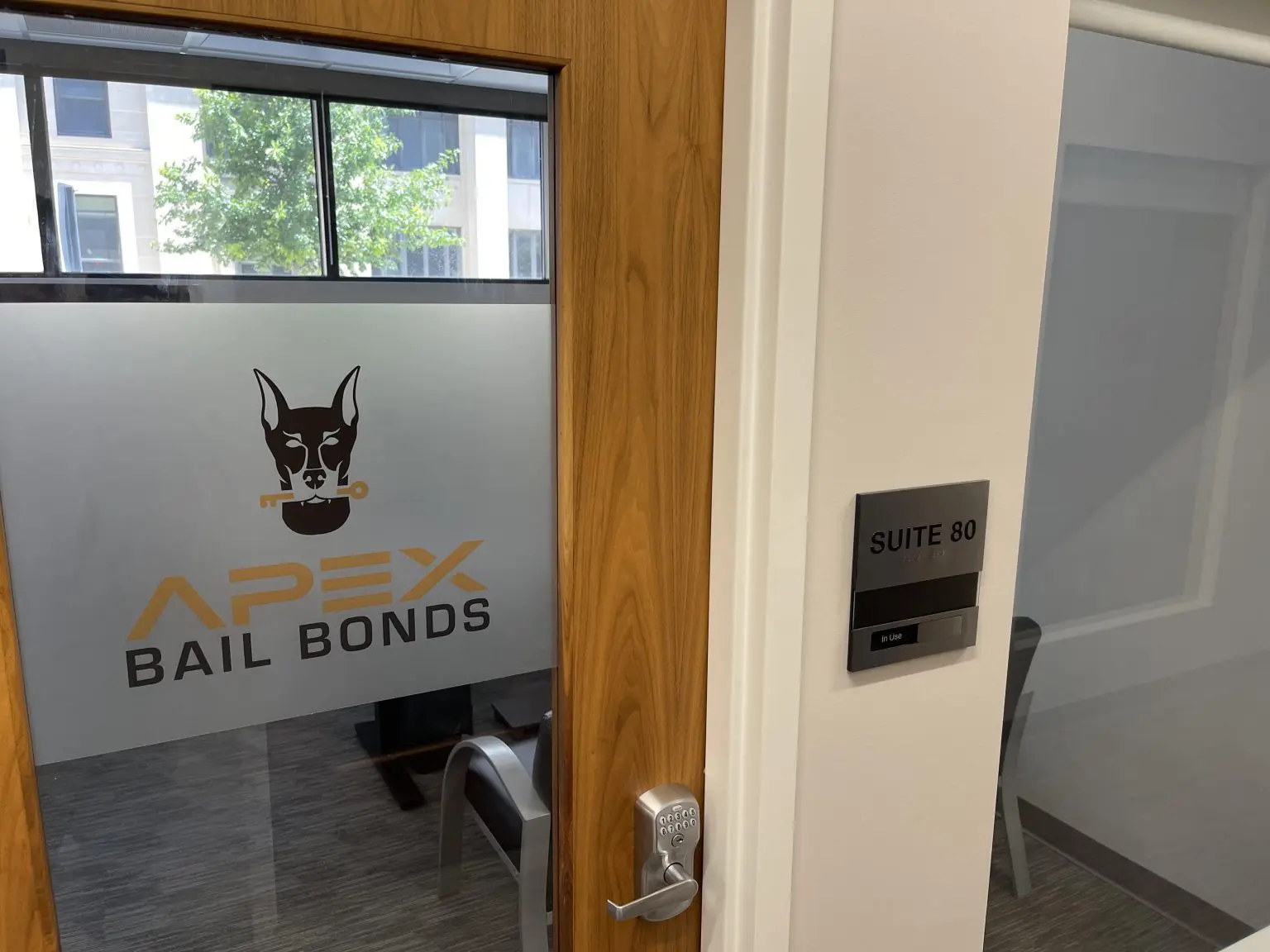
Apex Bail Bonds serves Guilford County from 101 S Elm St, Suite 80, Greensboro, NC 27401, one block from the Guilford County Detention Center at 201 S Edgeworth St. The agency is licensed and regulated by the North Carolina Department of Insurance, NCDOI License #18812863. Owner Fred Shanks IV holds three bail bond licenses, including North Carolina surety bondsman, North Carolina professional bondsman, and Virginia bondsman. That tri-licensed authority supports cross-state coordination when a defendant has Virginia ties and allows below-standard premium rates in specific professional bondsman scenarios when permitted by law.
Apex is built around interest-free bail financing that fits how families actually budget. Zero percent interest on financed premiums up to $1 million. Half-down-half-later financing on most bonds. Five percent down on bonds $5,000 and up when qualifications are met. Custom payment plans aligned to pay cycles. Same-day underwriting decisions. Special rates for homeowners, veterans, attorney referrals, and returning clients. No hidden costs and no junk fees. Payment options include cash, debit or credit card, check, Zelle, and secure online payments.
Apex’s Greensboro team posts bonds around the clock, weekends and holidays included. The agency has a documented track record of posting a $250,000 bond in under two hours in Guilford County and routinely moves first-time DWI bonds from call to filing in minutes because of the one-block proximity to the magistrate’s counter. Families who need immediate help with DWI bail bonds and bail bond payment plans Greensboro can call the local line 24 hours a day. Call (336) 609-1190 for Greensboro. For Reidsville, Graham, and the broader Piedmont Triad and Southside Virginia coverage, call (336) 394-8890. More information is available at https://www.apexbailbond.com/greensboro-nc. Availability is 24 hours a day, 7 days a week, 365 days a year.